Your EV Can Do More
Than Drive.
With bidirectional charging, an electric vehicle can become a source of backup power for your home, your devices, and even the electric grid.
POWER BEYOND THE ROAD
Transportation is only the beginning.
Electric vehicles are not just a way to get from place to place. Many models can also send stored energy back out through their batteries, allowing them to power a home, charge devices, operate equipment, or support the electric grid.
Power Your Home
Vehicle-to-Home technology can use energy stored in an EV battery to keep essential household systems operating during an outage.
Charge and Connect
Some EVs provide onboard electrical outlets that can power tools, appliances, camping equipment, phones, laptops, and other devices.
Support the Grid
Vehicle-to-Grid technology can allow connected EVs to return energy when demand is high, helping utilities balance electricity use.
VEHICLE-TO-LOAD IN THE REAL WORLD
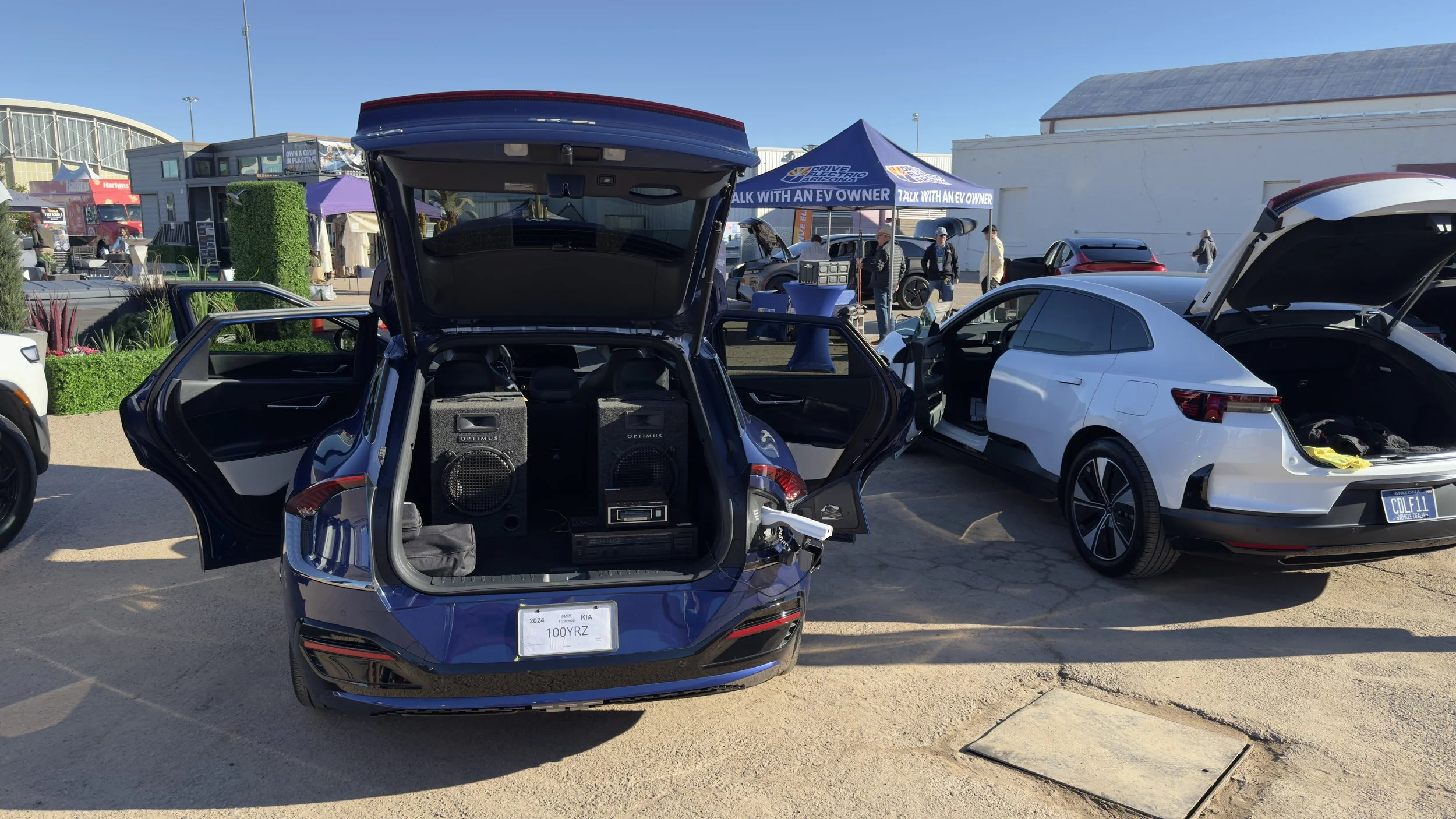
Yes, an EV can even power an 8-track player.
This Kia EV6 is using Vehicle-to-Load (V2L) capability to supply electricity directly from the vehicle's charge port — in this case, powering an 8-track player. It is a simple, memorable example of how energy stored in an EV can be used far beyond driving.
Photo courtesy of Shaun Barnette.
WHEN THE POWER GOES OUT
Your car may help keep
your home running.
Imagine a storm or grid disruption knocks out power in your neighborhood. Instead of relying solely on a noisy gas generator, a compatible EV may be able to quietly provide electricity from the energy already stored in its battery.
Quiet operation
No constantly running engine.
No tailpipe exhaust
Cleaner power at the point of use.
Large energy reserve
EV batteries can store substantial energy.
Stored energy when you need it most.
HOW ENERGY MOVES
One battery. Multiple possibilities.
Store
Your EV charges and stores electricity in its battery.
Convert
Compatible equipment safely manages electricity flowing outward.
Power
Energy can be used by a home, device, building, or electric grid.
KNOW THE TERMINOLOGY
Three ways an EV can share energy.
Vehicle-to-Load
Powers individual appliances, tools, electronics, or other equipment directly from the vehicle.
Vehicle-to-Home
Sends energy from a compatible EV to a home through approved bidirectional charging equipment.
Vehicle-to-Grid
Allows groups of connected vehicles to return electricity to the grid when permitted and needed.
SMARTER ENERGY USE
Store energy when it costs less. Use it when it matters more.
Bidirectional charging may eventually help households and businesses manage electricity costs by charging during lower-cost, off-peak hours and using stored energy during more expensive peak periods.
When connected across many vehicles, this stored energy can also become a valuable resource for improving community resilience.
Compatibility varies by vehicle.
Not every electric vehicle currently supports every form of bidirectional charging. Vehicle capability, charging equipment, utility approval, electrical upgrades, and professional installation may be required.
MORE THAN TRANSPORTATION
A mobile power source.
A backup energy reserve.
A better electric future.
Bidirectional charging transforms an EV into a clean-energy partner for your home and your community, proving that driving electric can deliver benefits far beyond the road.